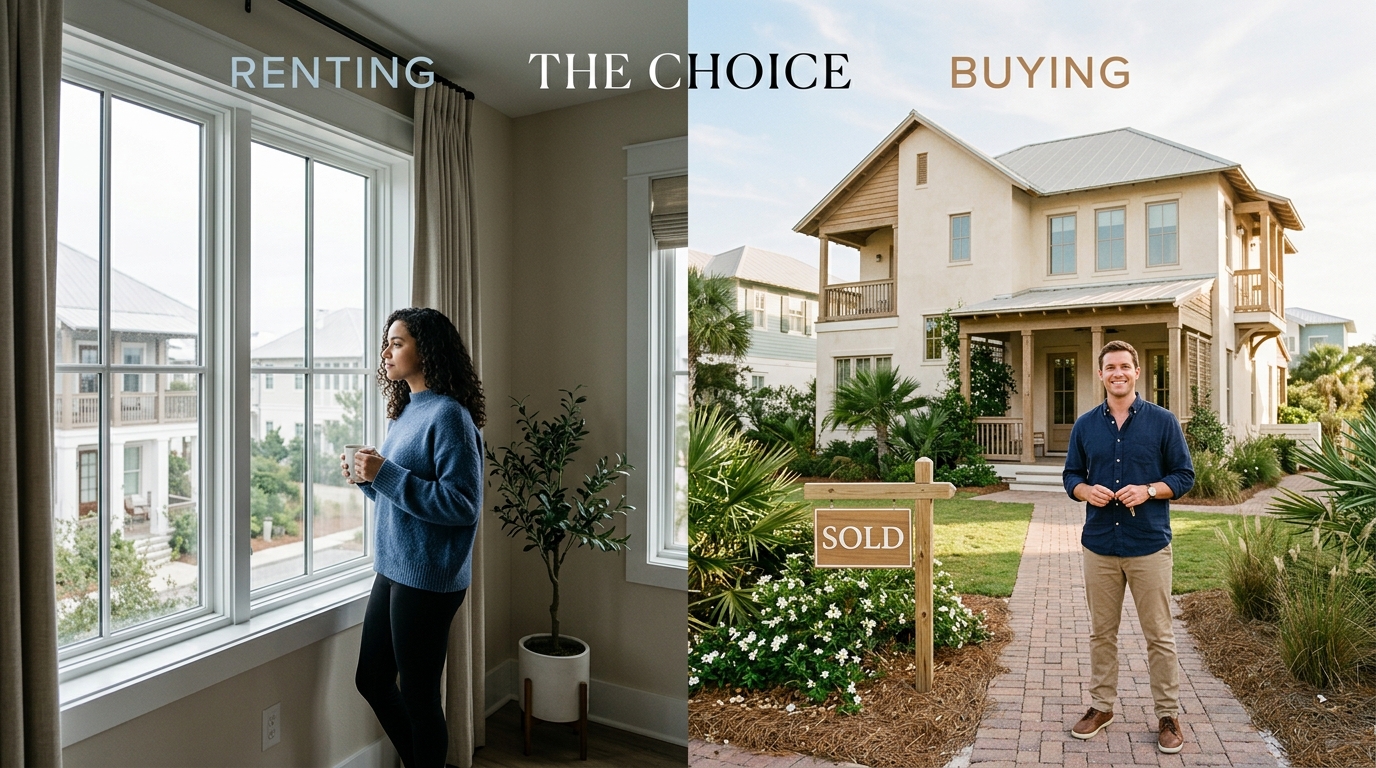
The question that keeps renters up at night is often the same one that nags at new homeowners: did I make the right choice? In 2026, deciding whether to rent or buy isn't a simple binary decision anymore. The math has shifted, the market has evolved, and frankly, there's no one-size-fits-all answer. But there are tools to help you figure out what's right for your situation, and as your Rosemary Beach real estate expert, I'm here to walk you through them.
Let me start with the uncomfortable truth that nobody wants to admit: renting is often cheaper month-to-month in 2026, but buying can build more wealth over time if you stay long enough. That's the real tension in today's housing market. Your monthly rent check might be smaller than a mortgage payment, but your long-term financial picture could be completely different.
The Current Market Reality
Before you can make an informed decision, you need to understand where we are right now. With the median U.S. existing-home price at $396,800 in January 2026, affordability continues to shape the rent-versus-buy decision. Meanwhile, 30 year fixed mortgages are hovering around 6.5% or slightly higher, which means monthly payments are higher than they were during the pandemic lending boom.
Here's what's interesting though: buying is cheaper in 23 of the 50 largest metros, while renting costs less in 27. The decision genuinely depends on where you live. For those of us in the Rosemary Beach area, this is particularly important context. Rosemary Beach occupies one of the highest tiers of real estate desirability along the corridor, with Zillow currently placing the average home value at around $2.72 million, while Realtor.com shows a median listing price of around $3.2 million. This is clearly a luxury market, which changes the calculus considerably.
The Case for Renting
Let's be fair to renting, because there are legitimate reasons millions of people choose it. Renting can be a smart move if your life is in flux or you plan to stay in an area for fewer than five years. If you're contemplating a job change, considering a different city, or simply uncertain about where you want to plant roots, renting gives you that freedom.
The practical advantages matter too. The most significant advantage of renting is not having to deal with home maintenance and repairs, and renting provides flexibility since you are only locked in for the terms of your lease. You won't get a surprise call about a failing roof or a water heater that needs replacing at 2 AM. That peace of mind has real value.
Another point in favor of renting: the biggest advantages include the freedom to relocate easily for a new job or lifestyle change, far lower upfront costs since there's no down payment or closing fees involved, and the peace of mind that comes with predictable monthly expenses.
But here's where I need to level with you as someone who helps people understand their housing options: you're not building any equity—every payment goes to the landlord rather than your own wealth. And while your rent payment might seem reasonable today, renters are seeing steady increases each year, and a lease that feels manageable today could cost much more in three years.
The Real Cost of Homeownership
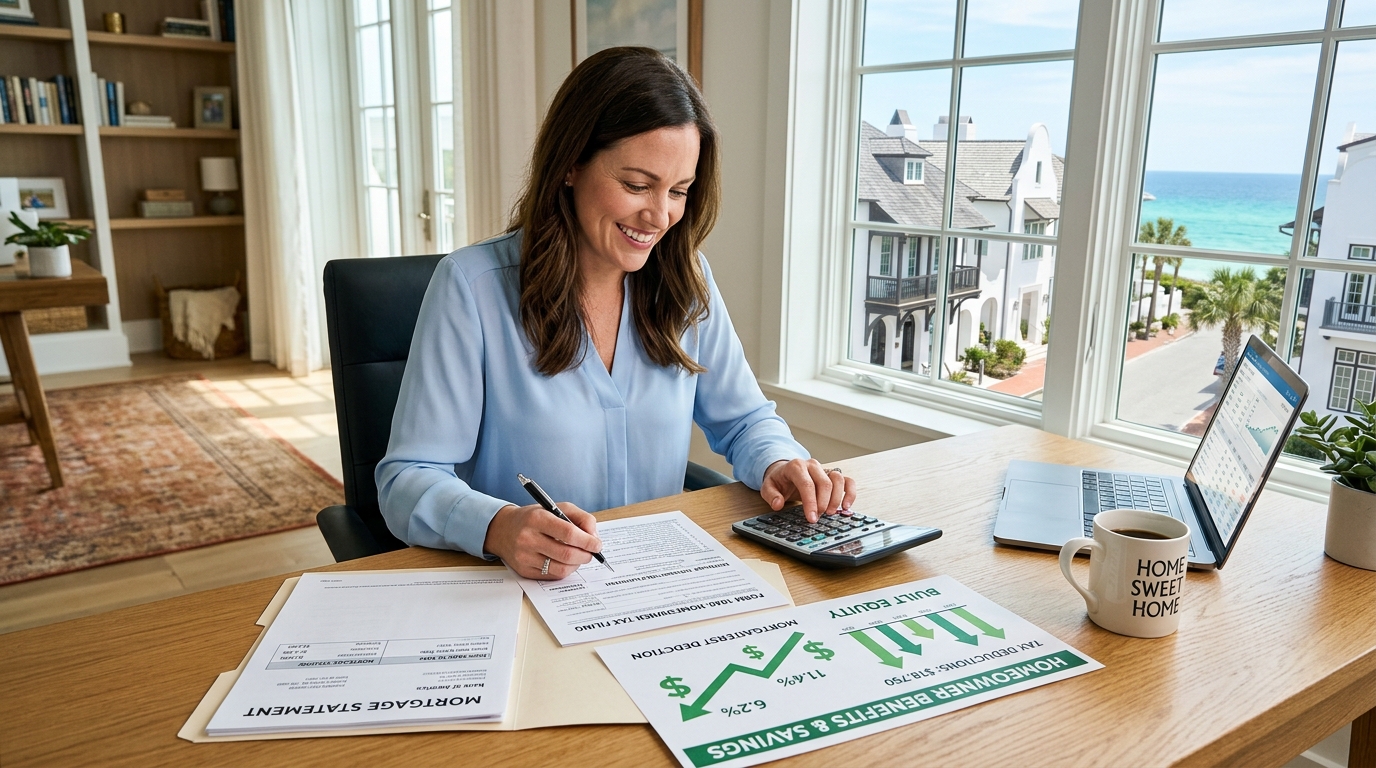
Now let's talk about the elephant in the room: homeownership is expensive, and the cost of homeownership goes far beyond your monthly mortgage payment, with rising insurance premiums, fluctuating property taxes, and ongoing maintenance adding significantly higher annual costs than expected.
When you're calculating whether buying makes sense, you need to account for everything. The true cost of homeownership includes taxes, insurance, and maintenance, not just the monthly mortgage payment. You should budget for taxes, insurance, maintenance, utilities, and possible HOA fees, which can add a significant amount to your monthly cost depending on location and property type.
If you're putting down less than 20%, there's another cost to consider. For conventional loans, putting down less than 20% means you'll need private mortgage insurance (PMI), which typically costs 0.4% to 1.5% of the original loan amount annually—on a $400,000 loan, that's an extra $1,600 to $6,000 per year until you reach 20% equity.
The upfront costs matter too. Buying and selling within 2–3 years almost never pencils out after you factor in closing costs (2–5% to buy, 5–8% to sell). This is crucial. If you're not planning to stay for at least five to seven years, the transaction costs alone will eat into any potential gains.
Why Buying Still Wins for Long-Term Wealth
Despite the higher costs and complexity, here's why I guide people toward homeownership: buying looks better over 7–10+ years when equity and appreciation are factored in. The breakeven point matters here. A buyer purchasing the typical U.S. home comes out ahead after about 5.9 years with 5% down and 6.0 years with 20% down.
When you own your home, homeownership offers a major financial advantage that renting can't match: equity, and with each mortgage payment, a portion of the principal goes toward building ownership. Instead of paying rent that makes someone else richer, you build equity with each mortgage payment.
Here's something people don't think about enough: a fixed-rate mortgage locks in your monthly payment, providing financial certainty and keeping your housing costs stable as inflation fluctuates. Meanwhile, rents climb every year. That stability matters for long-term financial planning.
Homeownership also comes with tax advantages. Owning a home can allow you to build home equity, which can be a financial resource in a time of need and a way to pass on wealth to future generations, and you have more freedom to do what you want with your property than when you rent.
The Timeline That Changes Everything
This is the decision framework that matters most: in most U.S. markets in 2026, buying a home only makes financial sense if you're staying for at least 5-7 years. Some research shows it more conservatively: if you plan to stay fewer than 3–4 years, renting is usually the better financial choice, but if you plan to stay 5+ years, buying typically wins financially, especially if home values appreciate modestly.
This is where you need to be brutally honest with yourself. Are you planning to stay in Rosemary Beach or the surrounding area for at least five years? Is your job stable enough that you're confident in your location? If the answer is yes, the financial case for buying is compelling.
Rosemary Beach: A Different Equation
I want to address something specific to our market. Rosemary Beach isn't a typical real estate market. It confirms Rosemary Beach as a premium luxury market rather than a broad middle-market beach community. Properties here still move quickly due to the scarcity of land. This means that while the absolute prices are higher, the appreciation potential and the strength of the market dynamics are also different.
If you're buying in Rosemary Beach with a five to seven year horizon, you're not just getting a place to live—you're making a wealth-building investment in one of the most desirable real estate markets in Florida.
Making Your Decision
So how do you actually decide? Start with these questions:
How long do you plan to stay? If it's less than five years, renting is likely smarter. If it's longer, buying probably wins financially.
Are your finances truly ready? If your credit score is below 620, you have high-interest debt, or you don't have enough saved for a down payment and reserves, renting while you prepare is smarter than stretching to buy.
What's your local market like? The math is entirely local, which is why understanding Rosemary Beach specifically matters so much.
Are you prepared for the full cost? Not just the mortgage, but taxes, insurance, maintenance, and utilities. The most important thing is to be ready for the full cost, not just the mortgage payment.
Your Path Forward
Here's what I know after working with hundreds of people making this decision: most people who can stay put for five or more years find that buying creates financial benefits that renting simply can't match. The stability, the equity building, the potential appreciation in a market like Rosemary Beach—these add up.
If you're ready to explore homeownership in Rosemary Beach, I'd encourage you to start by looking at what's available. Search homes on HOUSEJET, where you can see current listings and get a real sense of the market. As your local real estate expert, I'm here to help you understand the numbers specific to your situation and guide you toward a decision that works for your life and your finances.
The rent versus buy decision isn't about choosing the universally "right" answer. It's about choosing what's right for you, your timeline, and your goals. That's what I'm here to help you figure out.